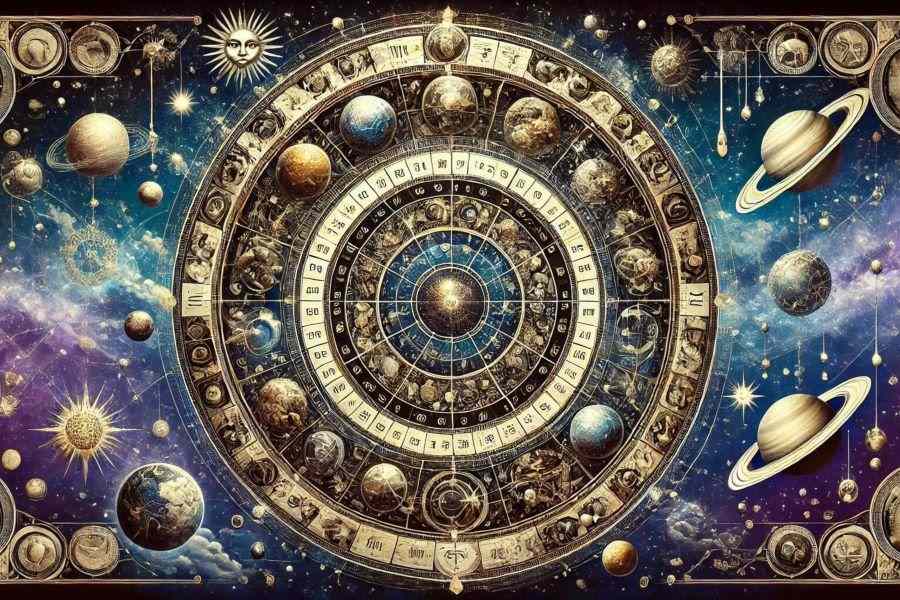
Astrology has long been a fascinating field, exploring the influence of celestial movements on human life. It offers deep insights into self-discovery and our connection to the universe. At Astroreka, we invite you to explore this magical realm, where each planet and star holds unique meaning, guiding us through life’s important moments.
What is Astrology?
Astrology is a pseudoscientific system that interprets how celestial bodies—planets, the Sun, the Moon, and stars—affect personality, life events, and human destiny. The term “Astrology” originates from Greek words Astra (Star) and Logos (Reason), implying that cosmic laws govern human experiences.
Astrology bridges science and intuition, mathematics and mysticism, cycles and symbols. It helps people draw connections between celestial movements and earthly events. A birth chart, calculated from an individual’s birth date, time, and location, serves as a unique cosmic blueprint. It reveals planetary placements at birth, offering insights into personality traits, strengths, challenges, and life patterns. Each birth chart is unique, providing a personal perspective on the universe.
A brief history of Astrology
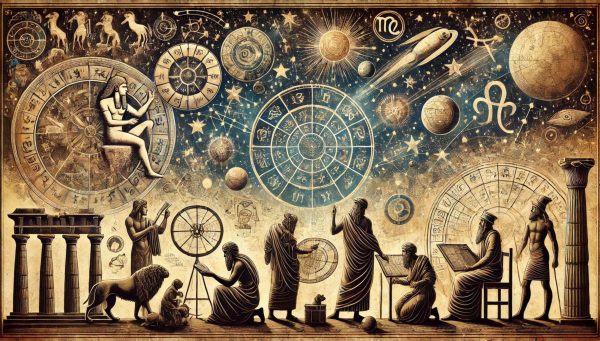
Astrology dates back thousands of years, originating from ancient Mesopotamia around 4000 BCE, where the Sumerians observed celestial movements. By 2000 BCE, the Babylonians developed the zodiac system, dividing the sky into 12 sections, forming the foundation of modern astrology.
Astrology later spread to other civilizations:
– Ancient Egypt: Integrated astrology with religious beliefs, using stars to predict royal destinies.
– Ancient Greece: Greek philosophers systematized astrology into a theoretical science, developing Natal and Mundane astrology.
– China: Chinese astrology combined celestial movements with Yin-Yang, the Five Elements, and the lunar calendar to predict human fate.
– Medieval Europe & the Renaissance: Astrology thrived as a respected science, influencing scholars like Kepler and Galileo.
The significance of Astrology
Astrology serves as a tool for self-understanding, personal growth, and future guidance. By analyzing planetary positions at birth, individuals gain insights into personality, strengths, and challenges. It helps people navigate life decisions, relationships, and career paths.
Astrology also plays a role in forecasting future trends. Planetary transits indicate upcoming opportunities, challenges, and turning points in life. It helps individuals prepare for key life events such as career changes, relationships, and financial shifts.
Relationship astrology (Synastry) compares birth charts to assess compatibility and potential dynamics in personal and professional relationships.
Astrology in daily life
Astrology is widely applied in horoscopes and fortune-telling, offering insights into personality traits, future trends, and decision-making. Common applications include:
– Personal horoscopes: Analyzing a birth chart to understand an individual’s character and destiny.
– Predictive astrology: Forecasting personal events based on planetary movements.
– Electional astrology: Choosing the best time for important events like marriage, business ventures, or travel.
– Annual and monthly horoscopes: Predicting general trends for each zodiac sign based on planetary cycles.
Conclusion
Astrology, with its rich history and profound insights, acts as a bridge between humanity and the universe. It not only offers a tool for self-discovery but also provides guidance in navigating life’s challenges. While not a mainstream science, astrology continues to shape perspectives, helping individuals align with cosmic energies for personal growth and deeper understanding.